
Enhance Your Facial Appearance


A well-proportioned nose can play an important role in overall facial harmony. If you are unhappy with the shape, size, projection, or position of your nose, rhinoplasty can provide a way to reshape the nose according to your facial features and individual goals.
At Dr. Akhtar ENT & Rhinoplasty Clinic in Islamabad, patients can consult about rhinoplasty and different nose reshaping procedures, including revision rhinoplasty, functional rhinoplasty, primary rhinoplasty, ethnic rhinoplasty, reconstructive rhinoplasty, and other specialized rhinoplasty procedures.
What Is a Rhinoplasty?
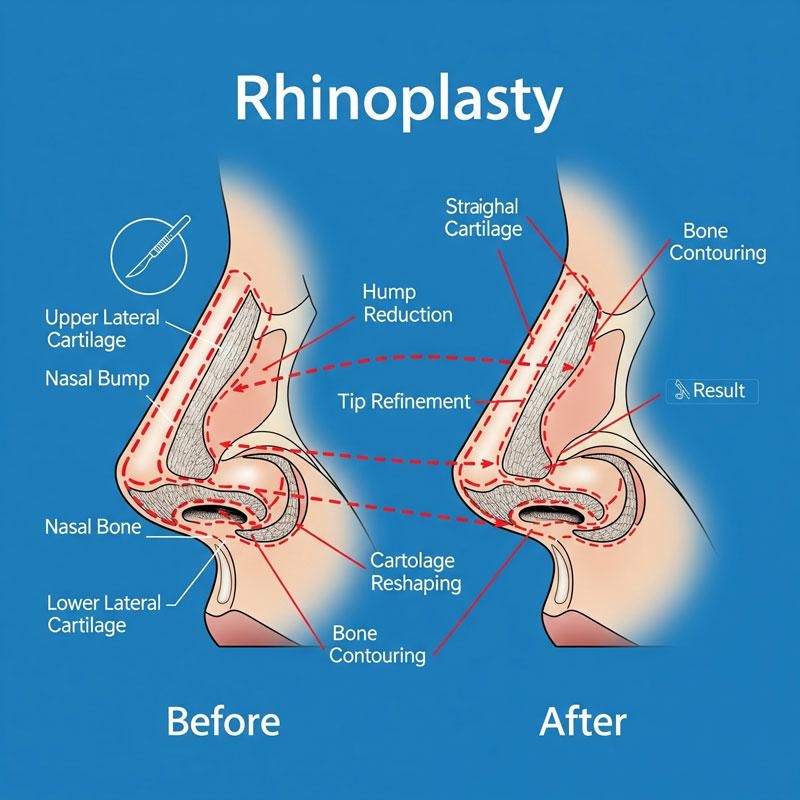
Rhinoplasty is a surgical procedure used to change the shape and structure of the nose. It may be performed to improve appearance, correct structural problems, or address certain breathing difficulties. The procedure can involve reshaping the nasal bone, cartilage, bridge, tip, or nostrils depending on the patient’s individual anatomy and treatment goals.
Rhinoplasty is also commonly called nose reshaping or a “nose job.” Because the nose is a central feature of the face, even carefully planned changes can influence overall facial balance.
What Can Rhinoplasty Correct?
Depending on the patient’s anatomy and treatment plan, rhinoplasty may be used for concerns such as:
- A nasal hump or bump
- A crooked or asymmetrical nose
- A wide or narrow nose
- A drooping nasal tip
- An overly prominent or broad nasal tip
- Nostrils that appear too wide or asymmetrical
- An undesirable nasal profile
- Certain structural problems affecting nasal breathing
- Changes resulting from previous surgery or injury
The exact surgical approach depends on the patient’s nasal structure, facial proportions, functional concerns, and desired outcome.
How Can Rhinoplasty Enhance Your Look?
The objective of aesthetic rhinoplasty is not simply to make the nose smaller. Good nose reshaping focuses on creating a more balanced relationship between the nose and the rest of the face.
Depending on the individual case, rhinoplasty can refine the nasal bridge, improve the shape of the nasal tip, adjust nasal projection, narrow or reshape the nostrils, or correct an unwanted bump.
Nose Elevation and Tip Refinement
Nose elevation generally refers to changing the position or projection of the nasal tip. A drooping or downward-pointing tip may affect the appearance of the nose, particularly when viewed from the side.
In appropriate patients, rhinoplasty can include tip elevation and refinement to create a more balanced nasal appearance. However, the amount of elevation required varies from patient to patient, and the goal should be a natural result that complements the individual’s facial features.
Who Can Do Rhinoplasty?
Rhinoplasty should be performed by a properly trained and experienced surgeon who has specific expertise in nasal surgery and facial anatomy. Depending on the type of procedure, rhinoplasty may be performed by appropriately trained plastic surgeons, facial plastic surgeons, or ENT surgeons with expertise in rhinoplasty.
Choosing the right surgeon is particularly important because rhinoplasty combines aesthetic considerations with the functional anatomy of the nose.
During a consultation, the surgeon can assess:
- Your nasal structure
- Facial proportions
- Nasal breathing
- Previous nasal injuries or surgeries
- Your aesthetic concerns
- Your expectations from surgery
- The most appropriate surgical technique for your case
A consultation is also important for establishing realistic expectations because the final result depends on individual anatomy, healing, and the surgical plan.
Different Types of Rhinoplasty
Rhinoplasty is not a one-size-fits-all procedure. Different techniques may be selected according to the patient’s needs.
1. Primary Rhinoplasty
Primary rhinoplasty is performed on a nose that has not previously undergone rhinoplasty surgery. It may address cosmetic concerns such as nasal shape, bridge, tip, projection, or symmetry.
2. Revision Rhinoplasty
Revision rhinoplasty, also called secondary rhinoplasty, is performed when a patient has previously undergone nasal surgery and requires further correction or refinement.
Revision cases can be more complex because previous surgery may have changed the nasal cartilage, bone, soft tissue, or internal support structures. In some cases, additional cartilage may be required for reconstruction.
For this reason, patients considering revision rhinoplasty should have a detailed consultation with a surgeon experienced in complex nasal surgery.
3. Functional Rhinoplasty
Functional rhinoplasty focuses on improving nasal function while addressing structural problems. It may be considered when structural abnormalities contribute to breathing difficulties.
In selected patients, rhinoplasty may be combined with procedures such as septoplasty to address both appearance and nasal function.
4. Ethnic Rhinoplasty
Ethnic rhinoplasty takes into consideration the patient’s individual ethnic characteristics and facial proportions. The objective is to achieve appropriate refinement while maintaining the patient’s natural identity and facial harmony.
5. Reconstructive Rhinoplasty
Reconstructive rhinoplasty may be used to restore nasal structure following trauma, congenital differences, or other conditions that have affected the nose.
6. Tip Rhinoplasty and Nose Elevation
Some patients primarily require refinement of the nasal tip. Depending on the anatomy, treatment may involve reshaping, refining, or elevating the tip to improve facial balance.
Is Rhinoplasty Only for Cosmetic Reasons?
No. Although many people choose rhinoplasty to improve the appearance of their nose, nasal surgery can also have functional and reconstructive purposes.
For example, structural problems associated with a deviated septum, previous injury, or other nasal abnormalities may affect breathing. In suitable cases, surgery can address functional concerns alongside aesthetic changes.
This is why a comprehensive examination of both the external appearance and internal structure of the nose is an important part of rhinoplasty planning.
Why Is Individual Rhinoplasty Planning Important?
Every nose is different. Skin thickness, cartilage strength, bone structure, facial proportions, previous surgery, and breathing function can all influence the surgical plan.
A personalized approach to nose reshaping can help the surgeon determine which areas need modification and which structures need to be preserved or supported.
The goal should be a nose that looks appropriate for the individual patient rather than an identical shape for everyone.
Rhinoplasty in Islamabad at Dr. Akhtar ENT & Rhinoplasty Clinic
Dr. Akhtar ENT & Rhinoplasty Clinic offers rhinoplasty services to its valuable patients in Islamabad.
Patients can consult regarding different rhinoplasty needs, including:
- Rhinoplasty
- Primary rhinoplasty
- Revision rhinoplasty
- Functional rhinoplasty
- Ethnic rhinoplasty
- Reconstructive rhinoplasty
- Nose reshaping
- Nose tip refinement
- Nose elevation
- Other specialized rhinoplasty procedures
If you are considering changing the shape or appearance of your nose, a personal consultation can help determine which approach is appropriate for your individual anatomy and goals.


Book a Rhinoplasty Consultation in Islamabad
If you are searching for rhinoplasty in Islamabad, nose reshaping in Islamabad, or information about nose elevation, you can contact Dr. Akhtar ENT & Rhinoplasty Clinic for a consultation.
Dr. Akhtar ENT & Rhinoplasty Clinic
📍 Clinic No. 25, Executive Complex, G-8 Markaz, Islamabad [Click to get directions)
🕒 Visit Timings: 3:00 p.m. – 9:00 p.m.
📅 Monday – Saturday
📱 WhatsApp: 0333 5559263
A consultation allows your nasal structure, concerns, and expectations to be assessed so that an appropriate treatment plan can be discussed.
Frequently Asked Questions
What is a rhinoplasty?
Rhinoplasty is a surgical procedure that reshapes the nose to improve its appearance, proportions, and, in appropriate cases, nasal function.
Can rhinoplasty change the shape of my nose?
Yes. Rhinoplasty can modify different parts of the nose, including the bridge, tip, nostrils, projection, and overall nasal shape, depending on the patient’s anatomy and surgical goals.
What is nose elevation?
Nose elevation generally refers to changing the position or projection of the nasal tip, particularly when the tip is drooping or points downward.
Who can do rhinoplasty?
Rhinoplasty should be performed by an appropriately trained surgeon with expertise in nasal surgery. A consultation is necessary to determine the appropriate surgical approach for an individual patient.
What is revision rhinoplasty?
Revision rhinoplasty is surgery performed after a previous rhinoplasty when additional correction, reconstruction, or refinement is required.
Does rhinoplasty improve breathing?
In selected patients, functional rhinoplasty and related nasal procedures can address structural problems that contribute to breathing difficulties.